
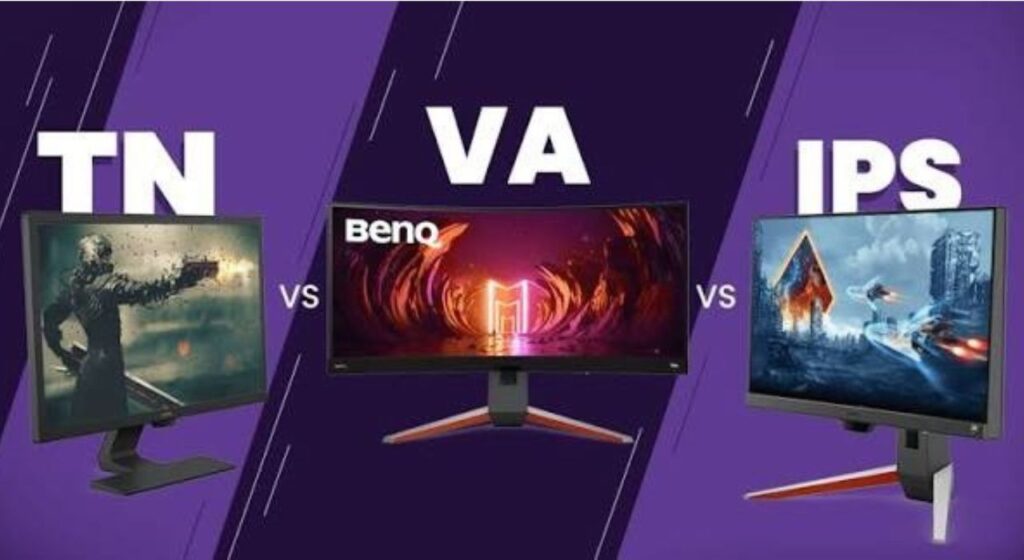
Best Monitor Panel Type for Gaming: TN vs IPS vs VA vs OLED Explained in 2026
Picking a gaming monitor used to be simple. A few years ago, your only real decision was size and refresh rate, because almost every gaming monitor used the same basic panel technology. Those days are long gone. In 2025, you’ve got TN, IPS, VA, QD-OLED, WOLED, and Mini LED all fighting for a spot on your desk — and each one delivers a genuinely different gaming experience. Getting this choice wrong doesn’t just affect how pretty your games look. It affects motion clarity, response time, HDR quality, and the level of immersion you actually feel when you’re playing. This guide cuts through the noise and explains exactly what each panel type does well, where it falls short, and — most importantly — which one is right for your specific gaming setup. No jargon overload, no filler. This article will help you to find the best monitor panel type for gaming. So read this article fully to pick the best gaming monitor with the best panel type. Why Panel Type Matters More Than Most People Think Here’s something that surprises a lot of buyers: two monitors with identical specs on paper — same resolution, same refresh rate, same size — can feel completely different to use, simply because of the panel technology inside them. One might have rich, deep blacks that make horror games feel genuinely atmospheric. Another might handle fast-moving objects with crystal clarity but look washed out in cinematic cutscenes. Panel type determines contrast ratio, response time behavior, color accuracy, viewing angles, and how well HDR actually performs. It’s not a minor detail — it’s the foundation of your entire display experience. TN (Twisted Nematic) — The Old Speed King TN panels are the oldest LCD technology still used in gaming monitors, and they’ve survived this long for exactly one reason: raw speed. These panels can achieve pixel response times as low as 0.5ms and support refresh rates well beyond 360Hz. For a long time, if you played competitive FPS games — Counter-Strike, Valorant, Overwatch — at a serious level, TN was the answer. The speed advantage was genuinely meaningful at the professional level. The problem is what TN gives up to get there. Color reproduction is noticeably weaker than every other panel type. Colors look flat and muted compared to IPS or OLED alternatives. Viewing angles are narrow — look at a TN panel from even a slight vertical angle and the image shifts dramatically in brightness and color. This makes them frustrating to share with someone seated beside you, and honestly, they just don’t look great for games where visuals matter. In 2025, TN panels have been pushed into a very narrow niche. Modern Fast IPS panels have closed the response time gap significantly, often matching TN in practical gaming scenarios while offering far superior visuals. Unless you’re a professional esports player who genuinely needs the absolute fastest pixel transitions possible and is willing to sacrifice visual quality to get there, TN isn’t worth considering over the alternatives available today. TN is best for: Professional esports players who need maximum speed above all else. IPS (In-Plane Switching) — The Versatile All-Rounder IPS panels are, without question, the safest and most versatile choice for the widest range of gamers. They offer wide 178-degree viewing angles that stay consistent no matter where you’re sitting, excellent color accuracy with many models now covering up to 100% DCI-P3, and response times that have improved dramatically in recent years. Modern Fast IPS panels reach 1ms GtG response times and support refresh rates up to 240Hz — putting them genuinely close to TN in competitive performance while looking far better doing it. The contrast ratio on IPS panels typically sits around 1,000:1, which is their biggest weakness compared to VA and OLED. In dark scenes, you’ll notice some degree of backlight bleed — a soft glow around the edges of the panel that’s particularly noticeable in games with dark environments. It’s not a dealbreaker for most gamers, but if you play a lot of horror games or dark RPGs and want truly deep blacks, IPS has limits. That said, IPS has advantages that matter for everyday gaming and productivity. Colors are accurate and consistent, text is sharp and clear, and there’s virtually no ghosting with modern Fast IPS panels. They work well in brighter room environments where OLED’s glossy reflective coating would be a problem. They’re also generally more affordable than OLED options with comparable specs, making them the go-to recommendation for gamers who want a balanced, dependable experience. IPS Black is a newer variant worth knowing about. It pushes the contrast ratio to around 2,000:1 — double that of standard IPS — which noticeably improves dark scene performance without the burn-in risk of OLED. The LG 27G850A-B, for example, uses Nano IPS Black to deliver 4K 240Hz with improved contrast on an LCD panel. IPS is best for: Most gamers — particularly those who play a mix of competitive and single-player titles in a moderately lit room. VA (Vertical Alignment) — The Contrast Champion VA panels do one thing better than any other LCD technology: contrast. Native contrast ratios typically sit between 3,000:1 and 5,000:1 — three to five times that of standard IPS panels. The practical result of this is that dark scenes look genuinely darker and more detailed, with blacks that feel substantially deeper than what IPS can deliver. For immersive games — space games, horror titles, slow-burn RPGs — VA panels create a noticeably more atmospheric visual experience. The tradeoff has historically been response time. VA panels struggle with what’s called “dark level smearing,” where dark pixels take longer to transition than bright ones. In fast, dark scenes — a character moving through a shadowy environment in a shooter — you can see a subtle ghosting or smearing effect behind moving objects. It’s particularly noticeable in competitive gaming where tracking fast-moving targets matters. Modern VA panels have improved significantly, but they still trail Fast IPS in this area.
Best Monitor Panel Type for Gaming: TN vs IPS vs VA vs OLED Explained in 2026 Read More »
Blog