If you’re serious about gaming, HDR is no longer a luxury — it’s a game-changer. A great HDR gaming monitor transforms how you experience every scene, from pitch-black dungeons to sun-drenched open worlds, delivering colors and contrast that standard monitors simply can’t match. Whether you’re chasing high frame rates in competitive shooters or soaking in cinematic story-driven games, choosing the right display makes all the difference.
In this guide, we’ve rounded up the ten best HDR gaming monitors on the market right now, covering everything from premium 4K OLEDs to budget-friendly Mini LED options. We’ve tested and researched each display across refresh rate, HDR performance, color accuracy, and value to help you find the perfect match for your setup and your budget.
What Makes These Monitors Stand Out for HDR Gaming?
HDR gaming is about more than just a bright screen. True HDR requires a combination of high peak brightness, deep black levels, wide color gamut coverage, and fast local dimming — and the monitors below deliver on all fronts. From QD-OLED and WOLED panels capable of infinite contrast to cutting-edge Mini LED backlights, this list covers every kind of HDR experience available in 2025. Whether your budget is $250 or $1,300, there’s an option here that will elevate your gaming visuals.
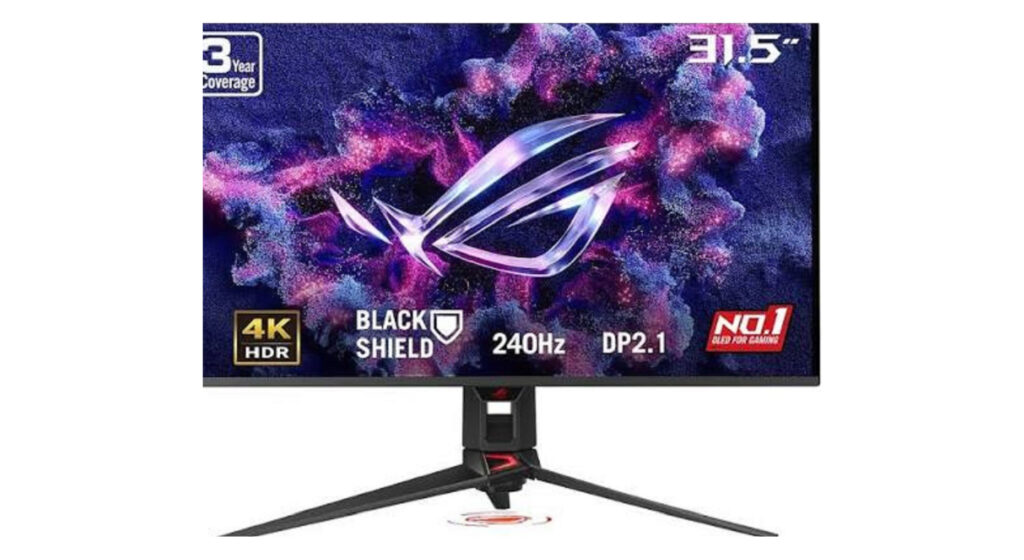
1. aSUS ROG Swift PG32UCDM — The Ultimate 4K OLED Gaming Monitor
Screen Size: 32 inches | Resolution: 4K 3840×2160 | Panel: QD-OLED | Refresh Rate: 240Hz | Response Time: 0.03ms | Sync: G-Sync Compatible + FreeSync | HDR: DisplayHDR True Black 400, Dolby Vision | Price: ~$1,100–$1,300
The ASUS ROG Swift PG32UCDM is arguably the most complete 4K gaming monitor available today. Built around Samsung’s flagship QD-OLED panel, it delivers infinite contrast, jaw-dropping color accuracy covering 99% DCI-P3, and near-instant response times that keep competitive gamers at peak performance. The 240Hz refresh rate at full 4K resolution makes this one of the fastest high-resolution displays on the market, and Dolby Vision support means movie and streaming content looks equally stunning. Passive cooling keeps things quiet, and the build quality matches the premium price tag.
Pros:
- Exceptional 4K QD-OLED picture quality with deep blacks and vibrant colors
- 240Hz at 4K — an unbeatable combination for both gaming and visual fidelity
- Dolby Vision support for premium streaming and HDR content
- Near-instant 0.03ms response time eliminates motion blur
- Factory-calibrated colors with excellent out-of-box accuracy
- Solid port selection including HDMI 2.1 and USB-C with 90W power delivery
- 3-year warranty with burn-in coverage for peace of mind
Cons:
- Glossy QD-OLED panel can produce visible reflections in bright rooms
- Premium price requires a high-end GPU to push frames near 240Hz at 4K
Who Should Buy This?
- Gamers who want the absolute best HDR and 4K experience in a 32-inch format
- Content creators and streamers who need elite color accuracy and Dolby Vision
- RTX 4080/4090 or RX 7900 XTX owners who can actually push 4K at high refresh rates
- Sim racing, RPG, and open-world gamers who prioritize immersion over raw frame rates
- Anyone who wants a premium do-it-all monitor for both gaming and entertainment
- Enthusiasts who want the sharpest text clarity from the RGB Stripe pixel layout
- Users looking for a long-term flagship investment with strong warranty backing
The ASUS ROG Swift PG32UCDM sets the gold standard for 32-inch 4K gaming. It’s expensive, and it demands a powerful PC to get the most out of it — but if you have the hardware and budget, there’s nothing quite like it. This is the monitor for gamers who refuse to compromise.
2. LG UltraGear 32GX870A-B — Best 32″ WOLED with Dual-Mode Flexibility
Screen Size: 31.5 inches | Resolution: 4K 3840×2160 (240Hz) / 1080p (480Hz) | Panel: WOLED (MLA+) | Refresh Rate: 240Hz / 480Hz Dual Mode | Response Time: 0.03ms | Sync: G-Sync Compatible + FreeSync Premium Pro | HDR: DisplayHDR True Black 400, 1300 nits peak | Price: ~$900–$1,000
The LG UltraGear 32GX870A-B brings something truly unique to the 32-inch OLED market: dual-mode operation. With a single hotkey press, you can switch between stunningly sharp 4K at 240Hz for story-driven games or Full HD at 480Hz for blazing-fast competitive play. Powered by LG’s WOLED panel with Micro Lens Array+ technology, it reaches an impressive 1,300 nits peak brightness — making it LG’s brightest OLED gaming display to date. Built-in webOS and a KVM switch add unexpected versatility for multi-device setups.
Pros:
- Dual-mode flexibility: switch between 4K/240Hz and 1080p/480Hz with a hotkey
- 1,300 nits peak brightness — among the highest of any OLED gaming monitor
- MLA+ technology enhances brightness without sacrificing OLED’s contrast advantage
- Anti-glare matte coating is easier to use in bright rooms than glossy panels
- Built-in KVM switch lets you control multiple PCs with one keyboard and mouse
- Excellent color accuracy out of the box with wide DCI-P3 coverage
- webOS built-in for Netflix, YouTube, and game streaming without a PC
Cons:
- DP 2.1 is limited to UHBR 13.5 (54 Gbps), requiring DSC for full 4K/240Hz
- Built-in speakers are basic — most users will want headphones or external audio
Who Should Buy This?
- Gamers who want the best of both worlds: cinematic 4K and competitive 480Hz speed
- PS5 Pro and Xbox Series X owners who want a do-it-all desktop display
- Streamers who want Netflix and YouTube access without booting a PC
- Multi-PC users who appreciate the built-in KVM switch functionality
- Anyone upgrading from a TV to a monitor for the first time
- Gamers who prefer a matte coating for brighter room environments
- Budget-conscious enthusiasts who want OLED performance under $1,000
The 32GX870A-B is one of the most versatile gaming monitors available at this price. The dual-mode feature alone sets it apart, giving you a genuinely different experience depending on what you’re playing. If flexibility and raw OLED quality matter to you, this is an outstanding choice.
3. ASUS ROG Strix XG32UCWMG — Premium WOLED Alternative at $1,000
Screen Size: 32 inches | Resolution: 4K 3840×2160 (240Hz) / 1080p (480Hz) | Panel: WOLED | Refresh Rate: 240Hz / 480Hz Dual Mode | Response Time: 0.03ms | Sync: G-Sync Compatible + FreeSync | HDR: True Black HDR, 1300 nits peak | Price: ~$1,000
The ASUS ROG Strix XG32UCWMG matches the LG 32GX870A-B in spec sheet terms but adds ASUS’s proven ROG ecosystem, including OLED Care Pro burn-in protection features, ASUS’s DisplayWidget software for quick profile switching, and Extreme Low Motion Blur Sync (ELMB) support. The dual-mode panel — delivering 4K at 240Hz or 1080p at 480Hz — makes this a genuinely flexible display. ASUS’s typically excellent stand, strong OSD customization, and three-year warranty sweeten the deal at this price point.
Pros:
- Dual-mode 4K/240Hz and 1080p/480Hz gives you full gaming flexibility
- 1,300 nits peak brightness delivers punchy, vivid HDR highlights
- ASUS OLED Care Pro actively prevents burn-in with intelligent screen management
- ELMB Sync combines blur reduction with variable refresh rate simultaneously
- Excellent stand with full ergonomic adjustment (tilt, swivel, height, pivot)
- ASUS DisplayWidget software makes profile and picture mode switching effortless
- Strong 3-year warranty with OLED burn-in coverage
Cons:
- No USB-C video input, which limits single-cable laptop connectivity
- At 32 inches, 4K pixel density is lower than smaller 27-inch 4K panels
Who Should Buy This?
- ROG ecosystem users already invested in ASUS peripherals and software
- Competitive gamers who want the option of 1080p/480Hz for esports titles
- Immersive single-player gamers who want cinematic 4K HDR
- Users who prize ASUS’s reliability and after-sales service track record
- Streamers and creators who benefit from DisplayWidget’s color profile switching
- Anyone who wants a sturdy, fully adjustable stand out of the box
- Gamers running powerful mid-to-high-end GPU builds (RTX 4070 Ti and above)
The XG32UCWMG is a strong alternative to the LG model at a similar price. If you’re already in the ASUS ecosystem or prefer ROG’s software suite, this monitor justifies its cost with a well-rounded feature set and dependable build quality.
4. Alienware AW3425DW — Best Ultrawide QD-OLED for Most Gamers
Screen Size: 34 inches | Resolution: WQHD 3440×1440 | Panel: QD-OLED | Refresh Rate: 240Hz | Response Time: 0.03ms | Sync: G-Sync Compatible + FreeSync Premium Pro + VESA AdaptiveSync | HDR: DisplayHDR True Black 400, 99.3% DCI-P3 | Price: ~$1,000–$1,200
Dell’s Alienware lineup has long dominated the ultrawide OLED segment, and the AW3425DW continues that tradition with a clear mission: deliver premium QD-OLED performance at a competitive price. Bumping the refresh rate from 165Hz to 240Hz over its predecessor, and arriving with a refreshed design aligned to Alienware’s 2025 aesthetic, it uses a refined second-generation QD-OLED panel that improves on color accuracy and panel longevity. The 1800R curve pulls you into the scene, and the 99.3% DCI-P3 coverage means every title pops with cinematic color. Official support for G-Sync, FreeSync Premium Pro, and VESA AdaptiveSync simultaneously makes this the most GPU-agnostic premium monitor on this list.
Pros:
- 240Hz refresh rate at WQHD ultrawide — a massive upgrade over older 165Hz models
- 99.3% DCI-P3 color gamut with excellent factory calibration out of the box
- Compatible with VESA AdaptiveSync, NVIDIA G-Sync, and AMD FreeSync simultaneously
- 1800R curved ultrawide creates a genuinely immersive gaming experience
- $800 MSRP undercuts most competing ultrawide OLEDs by $100 or more
- 0.03ms response time for ghosting-free fast-paced gameplay
- Dell’s Alienware 3-year premium warranty with OLED burn-in coverage
Cons:
- No USB-C input — a notable omission at this price in 2025
- Ultrawide format means some competitive titles don’t natively support the aspect ratio
Who Should Buy This?
- Open-world, RPG, and simulation gamers who want maximum immersion
- Productivity power users who benefit from the extra horizontal screen real estate
- Competitive FPS players gaming in supported titles like Cyberpunk 2077, The Witcher 3, and League of Legends
- Anyone upgrading from a 60Hz or 144Hz IPS panel for the first time
- Dual-monitor setup owners replacing two screens with one ultrawide
- Budget-conscious enthusiasts who want the best ultrawide QD-OLED at the lowest price
- Multi-platform gamers with both NVIDIA and AMD GPUs in different machines
The Alienware AW3425DW is a legend reborn at a price that genuinely disrupts the ultrawide OLED market. It’s the most balanced premium ultrawide you can buy right now, and the combination of a polished panel, aggressive pricing, and top-tier HDR performance makes it the easiest recommendation in this entire guide.
5. MSI MPG 341CQR QD-OLED X36 — World’s Fastest Curved Ultrawide OLED
Screen Size: 34 inches | Resolution: WQHD 3440×1440 | Panel: 5th-Gen QD-OLED (V-Stripe RGB) | Refresh Rate: 360Hz | Response Time: 0.03ms | Sync: AdaptiveSync + FreeSync + G-Sync Compatible | HDR: True Black 500, 1300 nits | Price: ~$900–$1,100
The MSI MPG 341CQR QD-OLED X36 is in a class of its own. Built on Samsung’s fifth-generation QD-OLED panel with a brand-new V-Stripe RGB subpixel layout, it achieves 360Hz on a curved 34-inch ultrawide — the highest refresh rate ever seen on this form factor. The V-Stripe arrangement dramatically reduces the color fringing that plagued previous QD-OLED generations, resulting in sharper text and cleaner edges. A full-spec DisplayPort 2.1 input handles the bandwidth at maximum resolution and speed, while USB-C with 98W power delivery means laptops can connect and charge over a single cable. A built-in KVM switch, AI presence sensor, and Console Mode round out an almost absurdly comprehensive feature set.
Pros:
- 360Hz refresh rate on a 34-inch ultrawide OLED — the fastest curved ultrawide ever made
- 5th-gen QD-OLED with V-Stripe RGB layout minimizes color fringing and improves text clarity
- True Black 500 certification delivers noticeably brighter HDR than True Black 400 panels
- USB-C with 98W power delivery for single-cable laptop connections
- Built-in KVM switch and AI Care Sensor add real productivity utility
- Full DisplayPort 2.1 UHBR 13.5 bandwidth handles 360Hz without compromise
- 3-year burn-in warranty adds long-term confidence
Cons:
- Premium price sits at the higher end even within the ultrawide OLED segment
- Cable management on the stand could be more refined for a cleaner desk setup
Who Should Buy This?
- Competitive ultrawide gamers who demand both speed and immersion simultaneously
- FPS players who also want the extra field-of-view advantage of 21:9 in supported titles
- Creative professionals who want accurate, wide-gamut color alongside gaming performance
- RTX 4080/4090 owners with hardware powerful enough to approach 360 fps
- Laptop users who want to drive a monitor and charge their device over a single USB-C cable
- Multi-PC users who appreciate the KVM switch for switching between machines
- Anyone who wants the most technologically advanced ultrawide OLED available today
The MSI MPG 341CQR QD-OLED X36 isn’t just a great gaming monitor — it’s a statement. If you want the absolute cutting edge of ultrawide OLED technology in 2025, this is it. The 360Hz refresh rate combined with 5th-gen panel improvements makes it a genuinely unique product that’s worth every dollar for the right buyer.
6. ASUS ROG Strix XG27AQDMG — Best 27″ Glossy WOLED for HDR Gaming
Screen Size: 27 inches | Resolution: QHD 2560×1440 | Panel: Glossy WOLED (MLA+) | Refresh Rate: 240Hz | Response Time: 0.03ms | Sync: G-Sync Compatible + FreeSync Premium | HDR: True Black 400, up to 1300 nits peak | Price: ~$600–$750
The ASUS ROG Strix XG27AQDMG is one of the most visually striking monitors of 2024 — and it still holds up brilliantly. Its secret weapon is LG’s third-generation WOLED panel with MLA+ (Micro Lens Array) technology, which pushes peak HDR brightness to an impressive 1,300 nits. Combine that with the glossy screen surface, which dramatically deepens perceived contrast and makes colors look more saturated than any matte panel, and the result is HDR imagery that genuinely stops you in your tracks. A custom heatsink keeps temperatures in check during extended sessions, and ASUS’s Uniform Brightness tech ensures the panel stays consistent at all brightness levels.
Pros:
- Glossy WOLED panel delivers the most vivid, punch-through HDR visuals at 27 inches
- 1,300 nits peak brightness ensures HDR highlights are genuinely impactful
- 0.03ms response time and 240Hz for smooth, tear-free competitive gaming
- Custom heatsink design allows for brighter sustained brightness without throttling
- Uniform Brightness system prevents the dimming that plagues other OLED panels
- Excellent factory calibration with 99% DCI-P3 color gamut coverage
- Comprehensive stand with full ergonomic adjustments
Cons:
- Glossy coating reflects light sources and ambient lighting in bright rooms
- No USB-C video input — a notable absence compared to newer competitors
Who Should Buy This?
- Gamers who game primarily in a dark or semi-dark room environment
- HDR enthusiasts who want the most visually impactful 1440p display available
- ASUS ROG fans who want a 27-inch OLED within the ROG ecosystem
- Movie and content watchers who want cinema-quality contrast on a gaming monitor
- Players of visually rich games like Cyberpunk 2077, God of War, and Elden Ring
- Competitive gamers who still want top-tier visuals at 240Hz
- Anyone stepping up from a standard IPS monitor for the first time
The XG27AQDMG represents WOLED at its most visually impressive in the 27-inch segment. If you’re willing to manage room lighting, there’s no 27-inch 1440p monitor that delivers a more breathtaking HDR experience. Prices have dropped since launch, making it even easier to recommend now.
7. AOC Q27G40XMN — Best Budget HDR Gaming Monitor Under $300
Screen Size: 27 inches | Resolution: QHD 2560×1440 | Panel: VA Mini LED (FALD) | Refresh Rate: 180Hz | Response Time: 1ms | Sync: AdaptiveSync + FreeSync | HDR: VESA DisplayHDR 1000, 1,152 local dimming zones | Price: ~$250
Not everyone needs to spend $1,000 on an OLED, and the AOC Q27G40XMN is living proof of that. For an astonishing $250, you get a 27-inch VA panel with 1,152 full-array local dimming zones and a peak brightness exceeding 1,000 nits — specs that were reserved for $500+ monitors just a couple of years ago. The VA panel’s native 5,000:1 contrast ratio keeps blacks deep and dark even without dimming, and the quantum dot backlight expands the color gamut to near QD-OLED levels. For budget-conscious gamers who want genuine HDR performance without selling a kidney, this monitor is a no-brainer.
Pros:
- 1,152-zone Mini LED FALD backlight delivers precise HDR contrast at an unbeatable price
- VA panel’s 5,000:1 native contrast ratio outperforms IPS panels significantly
- Over 1,000 nits peak brightness makes HDR highlights genuinely impactful
- Quantum dot backlight ensures wide color gamut coverage comparable to premium models
- At $250, this monitor delivers HDR quality that rivals $400–$500 competitors
- Flat screen design works well for productivity, coding, and multi-monitor setups
- Adaptive sync support for smooth VRR gameplay
Cons:
- VA panel has slower pixel response than OLED or IPS — some motion smearing in very dark scenes
- DisplayPort is limited to 1.4, which means bandwidth constraints for certain HDR configurations
- Cannot run all claimed specs simultaneously due to bandwidth limitations
Who Should Buy This?
- Budget-conscious gamers who want real HDR performance without an OLED price tag
- First-time monitor buyers upgrading from a basic 1080p panel
- Office and productivity users who want HDR capability as a secondary bonus
- Console gamers on a tight budget who want better-than-TV HDR quality
- Students and casual gamers who play a mix of single-player and competitive titles
- Anyone who prioritizes contrast and HDR performance over raw speed
- Gamers who primarily play in controlled-lighting environments
The AOC Q27G40XMN is the best budget HDR gaming monitor available right now, and it’s not particularly close. The 1,152-zone Mini LED backlight is the star of the show, delivering HDR quality that embarrasses monitors twice its price. If you’re on a tight budget, this is the first place to start.
8. Alienware AW3423DWF — Best Affordable Ultrawide QD-OLED with Burn-In Warranty
Screen Size: 34 inches | Resolution: WQHD 3440×1440 | Panel: QD-OLED | Refresh Rate: 165Hz | Response Time: 0.03ms | Sync: FreeSync Premium Pro + VESA AdaptiveSync | HDR: DisplayHDR True Black 400, 99.3% DCI-P3 | Price: ~$700–$900
The Alienware AW3423DWF is one of the most beloved gaming monitors of recent years, and it remains a compelling buy in 2025 — especially when you find it at a discount. As the budget-friendly sibling to the original AW3423DW, it offers virtually identical QD-OLED image quality at a lower price, with the same 99.3% DCI-P3 color coverage and infinite contrast ratio. The slightly lower 165Hz refresh rate is barely noticeable in practice, and Dell’s industry-leading 3-year warranty covering OLED burn-in makes this one of the safest premium OLED purchases you can make.
Pros:
- Near-identical QD-OLED image quality to the flagship DW model at a lower cost
- Dell’s 3-year premium warranty explicitly covers OLED burn-in
- 99.3% DCI-P3 color gamut with excellent factory calibration (Delta E < 2)
- Infinite contrast from per-pixel dimming OLEDs for genuinely stunning HDR
- 1800R curved ultrawide format creates a deeply immersive gaming experience
- Automatic burn-in prevention features (Pixel Shift, Pixel Refresh) built in
- Firmware update support for future improvements and bug fixes
Cons:
- 165Hz refresh rate is lower than newer 240Hz ultrawide OLED alternatives
- Glossy QD-OLED coating reflects bright ambient light, best used in dim environments
Who Should Buy This?
- Value-seeking gamers who want premium ultrawide QD-OLED at a discounted price
- First-time OLED buyers who want burn-in protection from a reputable brand
- Open-world and RPG gamers who prioritize stunning visuals over maximum frame rates
- Users in dim or controlled-lighting environments where the glossy panel shines
- Anyone who can find this model at sub-$750 pricing — it becomes exceptional value
- Multi-taskers who want the extra screen real estate of ultrawide for productivity
- Gamers upgrading from a standard IPS or VA monitor for a dramatic visual leap
The AW3423DWF remains a fantastic monitor in 2025, particularly when found on sale. If you can live with 165Hz instead of 240Hz and want to save money on your ultrawide OLED purchase, Dell’s industry-leading burn-in warranty alone makes this a safer long-term bet than many competitors.
9. LG 27G850A-B — World’s First 27″ 4K 240Hz IPS Black Monitor
Screen Size: 27 inches | Resolution: 4K 3840×2160 (240Hz) / 1080p (480Hz) | Panel: Nano IPS Black | Refresh Rate: 240Hz / 480Hz Dual Mode | Response Time: 1ms (GtG) | Sync: G-Sync Compatible + FreeSync Premium Pro | HDR: DisplayHDR 600, 2000:1 contrast | Price: ~$700–$850
The LG 27G850A-B is a remarkable engineering achievement: the world’s first 27-inch gaming monitor to combine a 4K resolution with a 240Hz refresh rate on an LCD panel. Using LG’s Nano IPS Black technology, it achieves a 2,000:1 contrast ratio — double that of standard IPS panels — delivering noticeably deeper blacks and better shadow detail without the burn-in risk of OLED. The dual-mode feature lets you drop to 1080p for 480Hz if competitive speed is the priority. Hardware calibration support and 99% DCI-P3 color gamut coverage round out a spec sheet that appeals equally to gamers and content creators.
Pros:
- World’s first 27-inch 4K 240Hz LCD panel — a genuine milestone in display technology
- Nano IPS Black achieves 2,000:1 contrast, twice that of standard IPS panels
- No OLED burn-in risk — ideal for static HUD-heavy games and desktop use
- Dual-mode 480Hz at 1080p offers competitive speed without buying a second monitor
- DisplayHDR 600 certification with 670 nits peak delivers solid HDR performance
- Hardware calibration support ensures color accuracy at the professional level
- 99% DCI-P3 color coverage for wide gamut creative work and gaming
Cons:
- HDR performance doesn’t reach the same heights as OLED — lacks true blacks
- Some ghosting visible at 480Hz mode due to panel response speed limitations
Who Should Buy This?
- Gamers who want 4K 240Hz without the OLED burn-in risk
- Content creators who need professional-grade calibration alongside gaming performance
- Competitive gamers who want 480Hz option for esports titles alongside 4K for everything else
- Anyone running a bright office where OLED’s reflective glossy panels are impractical
- Console gamers who want 4K HDR on PS5 Pro and Xbox Series X at high frame rates
- Streamers who need accurate, wide color gamut for content production
- Power users who want the flexibility of dual-mode on an LCD panel
The LG 27G850A-B fills a unique niche that no other monitor occupies — 4K 240Hz without OLED. If you’ve been holding off on an OLED due to burn-in concerns but still want top-tier resolution and refresh rate, this is your answer. It’s the best non-OLED option on this entire list.
10. AOC Q27GAZD — Best Entry-Level QD-OLED Monitor Under $500
Screen Size: 27 inches | Resolution: QHD 2560×1440 | Panel: QD-OLED | Refresh Rate: 240Hz | Response Time: 0.03ms | Sync: G-Sync Compatible + FreeSync | HDR: DisplayHDR True Black 400, 110% DCI-P3 | Price: ~$500
If you want to experience the magic of QD-OLED without spending close to $1,000, the AOC Q27GAZD is the most affordable path in. At around $500, you get genuine QD-OLED with per-pixel dimming, infinite contrast, 110% DCI-P3 color coverage, and a 240Hz refresh rate — the same core technology found in monitors twice the price. AOC backs it with a 3-year zero bright dot warranty, which is genuinely impressive at this price point and removes much of the risk associated with buying a budget OLED. It’s not the brightest or most feature-rich OLED, but for first-time OLED buyers, it’s a revelatory experience.
Pros:
- QD-OLED technology delivers infinite contrast and true blacks at an accessible price
- 110% DCI-P3 and 147.6% sRGB for vivid, accurate colors out of the box
- 240Hz refresh rate with 0.03ms response time for smooth competitive gaming
- 3-year zero bright dot warranty provides genuine buyer confidence
- Slim, minimal bezel design suits multi-monitor setups perfectly
- G-Sync Compatible and FreeSync support for both NVIDIA and AMD GPU users
- Flat panel design is versatile for both gaming and productivity workflows
Cons:
- Connectivity is relatively basic — limited to HDMI 2.0 and DisplayPort 1.4
- No USB-C, no KVM switch, and no built-in speakers at this price tier
Who Should Buy This?
- First-time OLED buyers who want to experience QD-OLED without a major commitment
- Budget gamers who want true infinite contrast and deep blacks under $500
- Students or casual gamers who game primarily in dark room environments
- Console gamers connecting via HDMI who want a step up from standard IPS
- Anyone tired of the backlight bleed and blooming on their current LCD monitor
- Users upgrading from 1080p who want a 1440p QD-OLED leap in quality and speed
- Minimalist battlestation builders who want a clean, slim-bezel OLED display
The AOC Q27GAZD makes QD-OLED accessible in a way that wasn’t possible even a year ago. Yes, the connectivity is basic and brightness won’t match premium options — but the core OLED experience is the same. If you’ve been OLED-curious, this is the best starting point available.
Final Summary
HDR gaming monitors have come a long way in a short time, and 2025 is genuinely an exciting year to be a PC gamer. Whether you’re chasing infinite contrast on a QD-OLED ultrawide, the blazing speed of a 360Hz curved panel, or simply the best HDR performance $250 can buy, the options on this list cover every use case and budget. Our top picks remain the Alienware AW3425DW for the best all-around ultrawide value and the ASUS ROG Swift PG32UCDM for anyone who wants the absolute pinnacle of 4K HDR gaming. Don’t overlook the AOC Q27G40XMN if budget is tight — at $250, it punches far above its weight class.
Ultimately, no single monitor is perfect for everyone. Think about your room lighting, your GPU’s capabilities, whether burn-in risk matters to you, and whether you prioritize raw speed or visual quality. Use this guide as a starting point, and whichever monitor you choose from this list, you’ll be stepping into HDR gaming at a level that standard monitors simply cannot match.