If you are looking at premium OLED TVs in 2025, the LG G5 will almost certainly come up. It is one of the most talked-about TVs of the year — and a big reason for that is the panel technology packed inside it. LG did not just refresh the design or add a new remote. They introduced a genuinely new display panel that pushes OLED performance further than before.
This article breaks down exactly what panel technology the LG G5 Panel Technology uses, how it works, what is new compared to previous models, and whether it actually makes a real difference in daily use.
What Type of Panel Does the LG G5 Use?
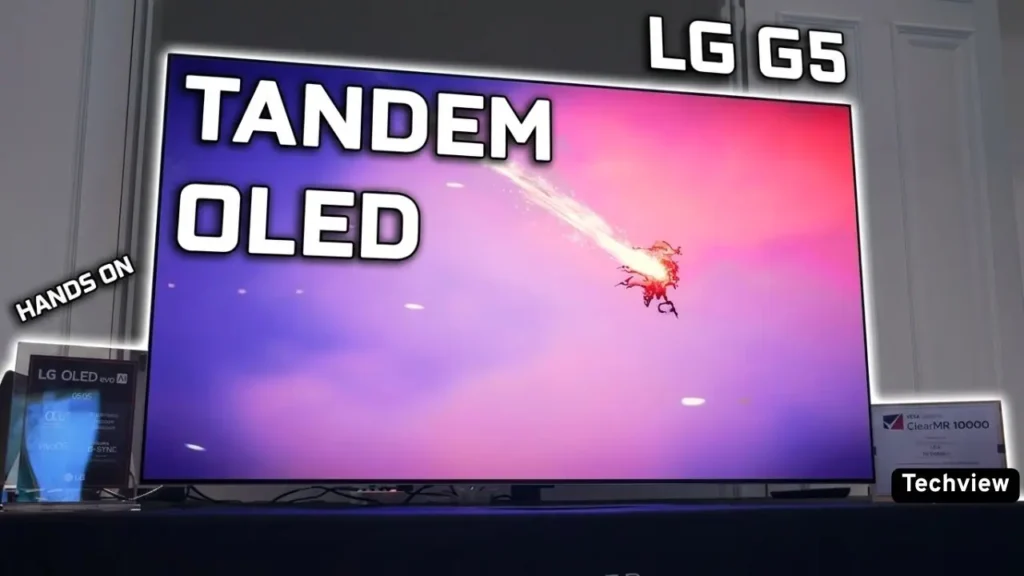
The LG G5 uses OLED display technology — specifically, a newer, more advanced version of it. In 2025, LG’s G-series moved away from the MLA (Micro Lens Array) panel in favor of LG Display’s new 4-layer WOLED structure, also known as Primary RGB Tandem or 4th generation OLED.
In previous models like the G4, LG used a 3-layer OLED structure combined with Micro Lens Array (MLA) technology to boost brightness. The G5 drops MLA and instead stacks four layers of OLED light-emitting material on top of each other. More layers mean more light output — and that is the core idea behind this upgrade.
This panel is also referred to as 4-stack WOLED or Primary RGB Tandem OLED, terms you will see used across tech reviews and display databases. The “W” in WOLED stands for white — LG’s OLED panels use white light sources alongside color filters to produce their final image, which is a different approach from Samsung’s QD-OLED panels that use blue OLEDs and quantum dots.
The 4-Layer OLED Structure Explained Simply
Traditional OLED panels stack two or three light-emitting layers to generate brightness. The G5 goes one step further. The existing WOLED panel stacks light-emitting layers in three layers (3-stack), but the newly introduced technology stacks one more layer and improves light-emitting elements and blue light-emitting materials.
Think of it like this: if one layer of lights gives you a certain brightness level, adding a fourth layer on top adds more output without needing a stronger power supply. In fact, the extra layer actually makes the panel more efficient, not less. LG G5 has been certified as consuming 132W and 164W in 55 and 65 inches respectively, compared to 161W and 209W for G4 from 2024 — representing up to a 21% decrease in power consumption.
So you get more brightness and lower energy use at the same time. That is a genuine engineering achievement.
Brightness: How Big Is the Improvement?
Brightness has always been OLED’s weakest point compared to high-end LCD panels. Peak brightness has increased to 2200 nits on the G5 in calibrated mode — even higher in the Vivid profile. As such, the LG G5 takes the crown as the OLED TV with the highest HDR brightness.
For comparison, the G4 from last year measured around 1650 nits peak brightness in calibrated mode. That is a significant jump, and it shows in real-world use — especially in HDR content where bright highlights like sunlight, fire, or reflections now look much more vivid and punchy.
In full screen (100%), the 65-inch sample hit 360 nits, which is 50% higher than last year’s G4. Full-screen brightness matters a lot for bright room viewing, because it represents how bright the TV gets when the whole screen is lit up, not just a small highlight area.
Ultra-Low Reflection Technology
One of the more impressive features added to the G5’s panel is how it handles reflections. LG Display has developed a special film that offsets both light reflected from the display’s surface and light absorbed and reflected inside the panel. With this ultra-low reflection technology, the fourth-generation OLED TV panel blocks 99% of internal and external light reflections, realizing perfect black even in a midday living room setting at 500 lux.
This is a huge practical benefit. Most TVs struggle in bright rooms because light from windows and lamps reflects off the screen and washes out the image. The G5 tackles this problem at the panel level itself. The result is that you can enjoy the deep blacks OLED is famous for even when your room is well-lit — not just in a dark home theater.
Color Performance
The new WOLED panel structure also promises an expanded color gamut, and there has been a slight increase in Rec.2020 color gamut coverage. The G5 covers a wide range of professional color spaces, making it suitable not just for entertainment but also for those who use a large TV for content review or creative work.
That said, some expert reviews point out one limitation. WOLED has not caught up to QD-OLED in color saturation, but it has caught up when it comes to power consumption. Samsung’s QD-OLED panels still have an edge in pure color richness, especially in saturated reds and greens. The G5 closes that gap somewhat but does not fully eliminate it.
Refresh Rate and Gaming Features
The LG G5 offers a variable refresh rate up to 165Hz with NVIDIA G-Sync, AMD FreeSync Premium, and VESA ClearMR 10000 certification.
This makes the G5 a strong option for gaming as well. The 165Hz refresh rate means smoother motion compared to standard 120Hz OLED TVs. Variable refresh rate support means screen tearing is eliminated when connected to a PC or compatible gaming console. VESA ClearMR 10000 is a motion clarity certification that confirms the panel handles fast-moving scenes with minimal blur.
For gamers who want the benefits of an OLED panel — perfect blacks, fast response times, wide viewing angles — combined with a higher refresh rate, the G5 delivers well on that front.
How Does the G5 Compare to Previous LG G-Series TVs?
Here is a simple breakdown of how the panel technology has evolved:
| Model | Panel Type | Peak Brightness | Key Tech |
| LG G3 | 3-stack WOLED + MLA | ~1,200 nits | MLA for brightness boost |
| LG G4 | 3-stack WOLED + MLA | ~1,650 nits | Improved MLA |
| LG G5 | 4-stack WOLED (No MLA) | ~2,200 nits | 4-layer structure, ultra-low reflection |
The shift from 3-stack to 4-stack is the biggest structural change LG has made to its OLED TV panel in several years. Removing MLA and replacing it with an extra layer of OLED material was a calculated move — MLA adds manufacturing cost and complexity, while the 4-stack approach improves brightness and efficiency together.
Available Sizes
The LG G5 is available in sizes ranging from 48 inches to an impressive 97 inches. However, one important note: the 97-inch model does not feature the 4-layer panel. If you specifically want the new 4-stack WOLED technology, stick to the 48, 55, 65, 77, or 83-inch options.
Processor: Alpha 11 AI Gen 2
The panel technology in the G5 works alongside LG’s latest processor. The LG G5 features the Alpha 11 AI Processor Gen 2, which delivers next-gen AI for a smarter, personalized experience along with AI Picture Pro and AI Super Upscaling.
The processor handles real-time image optimization — adjusting sharpness, brightness, noise reduction, and upscaling on the fly depending on what you are watching. A better panel needs a better processor to get the most out of it, and the Alpha 11 Gen 2 is LG’s current best for TVs.
Who Should Buy the LG G5?
The LG G5 makes the most sense for:
- Home theater enthusiasts who want the best possible image quality for movies and streaming content
- Gamers who want a high-refresh OLED panel with low input lag and VRR support
- Bright room viewers who previously avoided OLED due to reflection problems
- People upgrading from G3 or older models who want a noticeable brightness improvement
It is worth noting that the G5 sits at the premium end of LG’s lineup. LG G5 marks a visible leap in brightness for WOLED, and this innovation is reserved for the premium ranges — G5 and M5 — with no indication of when the technology will trickle down to cheaper TVs. So if you are budget-conscious, the C5 is a more accessible option, though it uses an older panel structure.
Summary
The LG G5 uses a brand-new 4-stack WOLED panel — LG’s fourth-generation OLED technology — which replaces the MLA-based 3-stack panel used in previous G-series models. The result is a significant jump in peak brightness (up to 2200 nits), better energy efficiency (21% lower power consumption than G4), and a special anti-reflection coating that blocks 99% of reflections. Add a 165Hz refresh rate, G-Sync and FreeSync support, and the Alpha 11 AI Gen 2 processor, and the G5 stands as the most capable OLED TV LG has ever made. It is a premium product with a premium price, but the panel technology behind it is genuinely new and worth understanding before you buy.
Frequently Asked Questions (FAQ)
What type of panel does the LG G5 use?
The LG G5 features a groundbreaking Primary RGB Tandem OLED panel (also known as a 4-Stack OLED panel structure). Instead of relying on a single emissive layer, this advanced tech stacks multiple layers (two blue, one red, and one green) to drastically amplify screen brightness and color volume, completely eliminating the need for old-gen MLA (Micro Lens Array) setups.
Note: The 48-inch and 97-inch variants of the G5 do not feature this specific Tandem architecture.
Does the LG G5 use WOLED?
Yes, the panel architecture built by LG Display falls under the newly rebranded Tandem WOLED category for large-sized screens. It retains an efficient white (W) light booster element combined with multi-stack layers to push peak brightness ceilings up to 45% higher than previous generations while mitigating traditional pixel degradation risks